

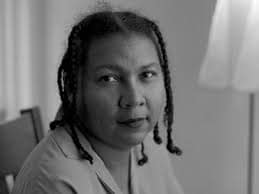
bell hooks understood something most of us are still learning: that finding your voice isn’t a one-time event—it’s a daily act of rebellion against everything that taught you to stay small.
When we talk about voices that shaped how we think about love, feminism, and finding our power, hooks stands as one of the most transformative thinkers of our time. Her words cut through the noise with a clarity that feels like someone finally saying what you’ve been thinking all along—like that moment when your best friend puts into words exactly what’s been sitting heavy on your heart.
Here’s what gets me: decades after she first started writing, her teachings remain startlingly relevant for women navigating ambition, relationships, and self-discovery in a world that still tries to shrink us. We’re still swallowing our words in meetings. We’re still making ourselves smaller to keep the peace. We’re still learning that our voices—messy, imperfect, and beautifully human—are exactly what this world needs.
hooks didn’t just write theory; she wrote truth. And that truth? It’s still setting us free, one brave word at a time.
Who Was bell hooks? A Trailblazer in Her Own Right
Let me tell you about Gloria Jean Watkins—though she’d probably roll her eyes at me starting there. Born on September 25, 1952, in Hopkinsville, Kentucky, she made a decision that would become her first act of rebellion: she chose to write under her great-grandmother’s name, bell hooks, deliberately lowercase. Not because she was being trendy, but because she wanted you to focus on what she was saying, not who was saying it.
As I was writing this piece, I caught myself doing exactly what hooks was trying to prevent. I kept going back through my draft, obsessing over whether I should capitalize her name, whether my formatting looked polished enough, whether some reader out there would think it was “incorrect.” And then it hit me like a splash of cold reality—I was completely missing the point. Here I was, so caught up in editorial perfection that I was drowning out the very woman whose revolutionary ideas I was trying to share.
That’s lesson number one for me, and maybe for all of us: sometimes our desperate need to look flawless actually keeps us from hearing what matters most. hooks knew that our obsession with surface-level “correctness” is just another way we silence ourselves and each other. She chose substance over style every damn time, and she’s calling us to do the same.
This woman grew up in the racially segregated South, watching firsthand how race, class, and gender crashed into each other in ways that would shape everything she’d later write. Sure, she collected her degrees—Stanford for undergrad, the University of Wisconsin for her master’s, and UC Santa Cruz for her doctorate—but her real education happened in the spaces between: in her community, with the women who raised her, and in the lived experiences that no classroom could teach.
Over three decades, hooks wrote more than 30 books that didn’t just sit pretty on shelves—they started kitchen-table conversations and late-night revelations. Her 1981 debut, Ain’t I a Woman: Black Women and Feminism, called out mainstream feminism for leaving Black women behind (again). Then came the books that probably live on your nightstand or wish list: All About Love, Feminism Is for Everybody, Teaching to Transgress. Each one an invitation to think deeper, love harder, and live bolder.
When she passed away on December 15, 2021, we didn’t just lose a brilliant mind—we lost a voice that dared us to be uncomfortable in service of becoming free. But here’s the thing about revolutionary women: their legacy doesn’t die with them. It lives in every conversation we have about liberation, every moment we choose belonging over perfection, every time we become who we’re meant to be instead of who we think we should be.
Teaching One: Love Is a Practice, Not Just a Feeling
In her bestselling book All About Love: New Visions, hooks redefined how we understand love—not as a noun we possess, but as a verb we practice. She argued that love isn’t something we fall into passively, like tumbling down a rabbit hole. It’s something we do, actively and intentionally, every single damn day.
This hits differently when you think about how often we wait around hoping to feel loved rather than cultivating loving practices in our own lives. hooks challenged us to stop romanticizing dysfunction and start demanding relationships built on care, respect, honesty, and commitment.
We are still being sold this fairy tale nonsense today. Hollywood keeps feeding us the same tired script: love just “finds” you while you’re living your best life in Paris, preferably while wearing a beret and looking effortlessly chic (Emily in Paris, anyone?). Or how about the way Bridgerton has us all swooning over the idea that true love means losing yourself completely in someone else’s gaze across a crowded ballroom? Don’t even get me started on how we’re supposed to believe that the right person will just magically appear when we least expect it, probably while we’re running late for work in the rain.
Here’s what these stories don’t show you: the daily choice to listen when your partner’s had a rough day instead of scrolling your phone. The unglamorous work of having hard conversations about money, boundaries, and whose turn it is to deal with the dishes. The revolutionary act of loving yourself enough to walk away from someone who makes you feel small, even if they look good on paper.
For ambitious women juggling careers, dreams, and relationships, this teaching is a complete game-changer. Love yourself through action—not just face masks and self-care Sunday posts, but choosing partners who show love through action, not just grand gestures and pretty words. Build friendships rooted in mutual care, where you show up for each other’s wins and messy moments.
As hooks wrote, “Love is an action, never simply a feeling.” That means love is in the showing up, the choosing each other daily, the doing the work even when the butterflies have long since flown away. It’s revolutionary, it’s practical, and it’s exactly what we need to hear in a world that keeps trying to sell us fantasy instead of teaching us how to build something real.
Teaching Two: Feminism Belongs to Everyone
One of hooks’ most accessible works, Feminism Is for Everybody: Passionate Politics, dismantled the idea that feminism is an exclusive club for a certain type of woman. She argued that true feminism fights against all forms of domination. Not just sexism, but racism, classism, and homophobia too.
This teaching invites us to examine our own blind spots. Are we fighting for liberation that includes all women, or just women who look like us? hooks pushed us to build bridges, to recognize that none of us are free until all of us are free.
We’re watching this play out in ways that would make hooks both frustrated and fascinated. There’s a whole movement of women rejecting feminism because they think it means we all have to become corporate warriors in power suits, sacrificing our desire for family or softness at the altar of “having it all.” They’re embracing traditional roles and calling it anti-feminist rebellion.
But here’s where we’re missing the entire point, and it breaks my heart: feminism isn’t about forcing every woman into the same mold; it’s about breaking the molds completely. It’s about choice, beautiful and messy and individual choice.
Maybe you want to homeschool your kids and bake bread from scratch while your partner works. Feminist. Maybe you want to climb the corporate ladder and hire a nanny. Also feminist. Maybe you want to do both, neither, or something totally different that doesn’t fit any neat category. Still feminist.
The magic happens when we stop gatekeeping each other’s choices and start protecting each other’s right to choose. When the stay-at-home mom fights for her friend’s right to equal pay. When the CEO advocates for better maternity leave policies. When the single woman by choice supports the woman who wants six kids, and vice versa.
Our feminism has to include the woman who can’t afford to stay home or the woman who’s denied promotions because of her accent. It has to fight for the trans woman facing workplace discrimination and the immigrant woman navigating systems designed to exclude her. Because if our version of “choice” only extends to women who look like us, earn like us, or love like us, then we’re just playing dress-up in oppression’s clothes.
Whether you’re new to feminist thought or have been in the trenches for years, this reminder matters now more than ever. Feminism isn’t about man-hating, perfectionism, or forcing everyone into the same box labeled “empowered woman.” It’s about collective liberation—the radical idea that every woman should get to write her own story without apologizing for the plot.
And there’s room for you at this table, no matter what your story looks like. The only requirement is that you save a seat for your sister whose story looks nothing like yours.
What bell hooks Taught Us About Finding Our Voice
hooks grew up in a household where talking back was punished, yet she built an entire career on the power of voice. Think about the beautiful irony of that for a second, this woman turned her biggest childhood “sin” into her greatest superpower. In Talking Back: Thinking Feminist, Thinking Black, she explored how speaking up—especially for marginalized women—is an act of resistance that reverberates far beyond the moment we open our mouths.
She wrote, “Moving from silence into speech is for the oppressed, the colonized, the exploited, and those who stand and struggle side by side a gesture of defiance that heals, that makes new life and new growth possible.”
That hits me right in the chest every time I read it. Because I’ve swallowed my words more times than I can count. I’ve bitten my tongue, smiled when I wanted to scream, nodded along when every fiber of my being was screaming “HELL NO.” And in business? Finding my voice has been less of a journey and more of an ongoing rebellion against decades of conditioning that taught me don’t interrupt, don’t disagree, don’t take up space.
How many times have you done this dance? Sat in a meeting watching a man get credit for your idea while you stayed silent because speaking up felt too risky? Swallowed your truth at a family gathering because challenging Uncle Bob’s outdated opinions wasn’t worth “ruining dinner”? Made yourself smaller in a relationship, dimming your light so someone else could shine brighter?
We’ve all been taught that keeping the peace is more important than keeping our integrity. That being “nice” matters more than being honest. That our comfort zones are safer than our growth zones, even when those comfort zones are slowly suffocating us.
But here’s what hooks knew, and what we’re still learning: every time we silence ourselves, we’re not just betraying our own truth, we’re robbing the world of what we have to offer. Our voices aren’t just personal tools; they’re political instruments of change. When we speak up about unfair treatment at work, we’re paving the way for the woman behind us. When we call out casual sexism at dinner parties, we’re teaching the next generation that this behavior isn’t acceptable. When we finally say “no” to the relationship that’s been draining us dry, we’re modeling self-respect for every woman watching.
Your voice is your rebellion against every system that told you to sit down and shut up. It’s your protest against the conditioning that convinced you your thoughts don’t matter. It’s your healing balm and your battle cry all rolled into one beautiful, messy, powerful package.
And yes, using it feels scary as hell sometimes. Yes, people might not like what you have to say. Yes, you might ruffle feathers, lose friends, or face pushback. But hooks reminds us that our voices aren’t just about us—they’re about collective liberation. When we speak our truth, we give permission for other women to speak theirs. When we refuse to be silenced, we create space for voices that have been waiting in the wings.
So let’s make a pact, you and I: let’s practice talking back. Let’s start small—disagreeing in a meeting, setting a boundary with a friend, speaking up when something doesn’t feel right. Let’s remember that our voices are not just tools for communication; they’re instruments of transformation. Because every time we choose courage over comfort, every time we pick truth over peace-keeping, we’re not just changing our own lives—we’re changing the world, one brave word at a time.
Teaching Four: Healing Requires Honest Self-Examination
hooks never shied away from tough conversations, including the ones we need to have with ourselves. Throughout her work, she emphasized that growth demands vulnerability and radical honesty about our wounds, our patterns, and our complicity in systems that harm us and others.
In Sisters of the Yam: Black Women and Self-Recovery, she explored how internalized oppression shows up in our mental health, our relationships, and our self-perception. She urged women to do the inner work, not as self-indulgence, but as a prerequisite for genuine change.
Here’s where voice and healing crash into each other: all those times we swallowed our words as kids? All those moments we were told to “get over it” or “stop being dramatic”? They didn’t just disappear—they got buried deep, wrapped in shame, festering in the dark corners of our hearts.
hooks knew that our silence about past hurts becomes the breeding ground for internalized oppression. When we don’t speak our truth about what happened to us, shame takes root. It whispers that we deserved it, that we’re too sensitive, that our pain doesn’t matter.
But here’s the revolutionary part: the first thing any good therapist will tell you is to talk about your trauma. To give it voice. To drag those shame-covered experiences into the light where they lose their power to control you.
This isn’t your permission slip to go to therapy—it’s your wake-up call that healing starts with speaking. Whether that’s in a therapist’s office, in your journal, or with a trusted friend, the path forward runs straight through your voice.
Healing isn’t linear or pretty, but it’s the foundation for everything else you want to build. And it starts the moment you decide your story—all of it—deserves to be heard.
Teaching Five: Education Should Liberate, Not Domesticate
In Teaching to Transgress: Education as the Practice of Freedom, hooks challenged traditional education models that prioritize obedience over critical thinking. She believed classrooms and by extension, all learning spaces should be sites of transformation where students and teachers engage as whole human beings.
The moment my world cracked wide open: first semester at Rutgers, sitting in a lecture hall, and the professor asked what I thought, it was so long ago, I don’t remember the class. But I wasn’t asked to regergitate fact, I was asked somethng to the effect of…what did I think about its impact on women and families?
My entire childhood education had been one giant game of memorization—dates, formulas, facts to regurgitate on command like a parrot. No one had ever asked me what I thought about a moment in history. No teacher had cared about my perspective on literature or my analysis of social movements. I was just supposed to sit quietly, absorb information, and spit it back exactly as it was fed to me.
But university was different. Suddenly, my voice wasn’t just welcome—it was required. Critical thinking wasn’t a nice-to-have; it was the entire point. And while I was grateful to finally be challenged, I couldn’t stop thinking: what if this had started earlier? What if we’d been developing our voices and our power from the very beginning, instead of learning to silence them first and then spending years trying to find them again?
Here we are, circling back to voice once more. Because hooks understood that education without voice isn’t education at all; it’s indoctrination. When we’re taught to memorize without questioning, to accept without analyzing, we’re being trained for compliance, not liberation.
For those of us committed to growth, this teaching extends far beyond formal education. What are you learning right now, and is it expanding your sense of what’s possible? Are you surrounding yourself with ideas that challenge you, or just consuming content that confirms what you already believe? Because there’s a difference between learning that makes you comfortable and learning that sets you free.
hooks invites us to approach learning as liberation. Read books that make you squirm a little. Follow voices that disrupt your comfort zone. Seek out perspectives that challenge your assumptions about the world and your place in it. Ask yourself not just “what happened?” but “what do I think about what happened?” and “how does this change how I see things?”
That’s where the magic happens—in the messy space between what we thought we knew and what we’re brave enough to question. In the courage to say “I disagree” or “I need to think about this differently” or “this doesn’t match my experience.”
Your education doesn’t end when you leave school. Every day is a chance to learn something that expands who you are and what you believe is possible. The question is: are you learning to conform, or are you learning to transform?
A Legacy That Lives On: Why bell hooks Still Matters
What makes hooks’ work so enduring is her refusal to separate the intellectual from the personal. She wrote about theory in ways that felt like conversations. She tackled heavy topics with warmth and accessibility. She made us feel seen while pushing us to see more clearly.
And here’s why that matters more than ever: walk into any meeting room, family gathering, or social event, and you’ll still find women choosing the wall over the spotlight. Women who have brilliant ideas but whisper them to their seat neighbor instead of speaking up. Women who’ve been so conditioned to stay quiet that using their voice feels like stepping onto a battlefield.
The conditioning we talked about earlier? It’s alive and well. We’re still teaching girls to be agreeable. We’re still rewarding women for not taking up space. We’re still living in a world where many of us would rather disappear than disagree.
That’s exactly why hooks’ work isn’t just relevant—it’s essential. Her influence ripples through every book club discussing All About Love, every classroom exploring intersectionality, every woman who finally decides her voice deserves to be heard. She gave us language for experiences we couldn’t quite name and frameworks for the futures we’re still building.
hooks knew that theory without heart is just academic noise. She understood that real change happens when we connect the dots between what we know and how we live. Her legacy lives on because she didn’t just tell us to find our voices—she showed us how to use them with both courage and compassion.
And that work? It’s still ours to do.
5 Teachings from bell hooks to Carry With You
Here’s what this remarkable woman left us, distilled into the kind of wisdom that changes everything when you’re brave enough to live it:
- Love is a practice. Stop waiting for the feeling and start showing up with action. Love yourself through that morning routine even when motivation is nowhere to be found. Love your people through their messy seasons, not just their highlight reels.
- Feminism is for everybody. Real liberation doesn’t pick favorites. It includes the woman in the corner office and the one cleaning it. It lifts up every sister, across every intersection of identity, because none of us are free until all of us are free.
- Your voice is revolutionary. Every time you speak your truth instead of swallowing your words, you’re dismantling centuries of conditioning. Your perspective matters. Your story matters. Your “no” and your “yes” both have the power to reshape the world around you.
- Healing requires honesty. Time to get real with yourself, love. Those patterns you keep repeating? Those wounds you keep picking at? They’re begging for your attention, not your avoidance. Do the work—messy, uncomfortable, necessary work.
- Education should free you. Stop learning to conform and start learning to transform. Read the books that challenge everything you thought you knew. Follow the voices that make you squirm a little. Question everything, especially the things you’ve never thought to question.
These aren’t just pretty quotes for your vision board, beautiful. They’re invitations to live differently, love better, and show up more fully in a world that desperately needs exactly what you have to offer. The question isn’t whether you’re ready—it’s whether you’re willing.
And I’m betting you are.
Comments are closed