

Podcasters who succeed in their craft are those who have been at it for years. Podcasting isn’t something that you can do for 6 months and achieve “overnight success” – I mean, you might, but the majority of us indie podcasters need more time to be able to reach our podcasting goals.
But as indie podcasters, how can we reach our podcasting goals without burning out and without a production team? We can achieve them with systems or a podcast workflow.
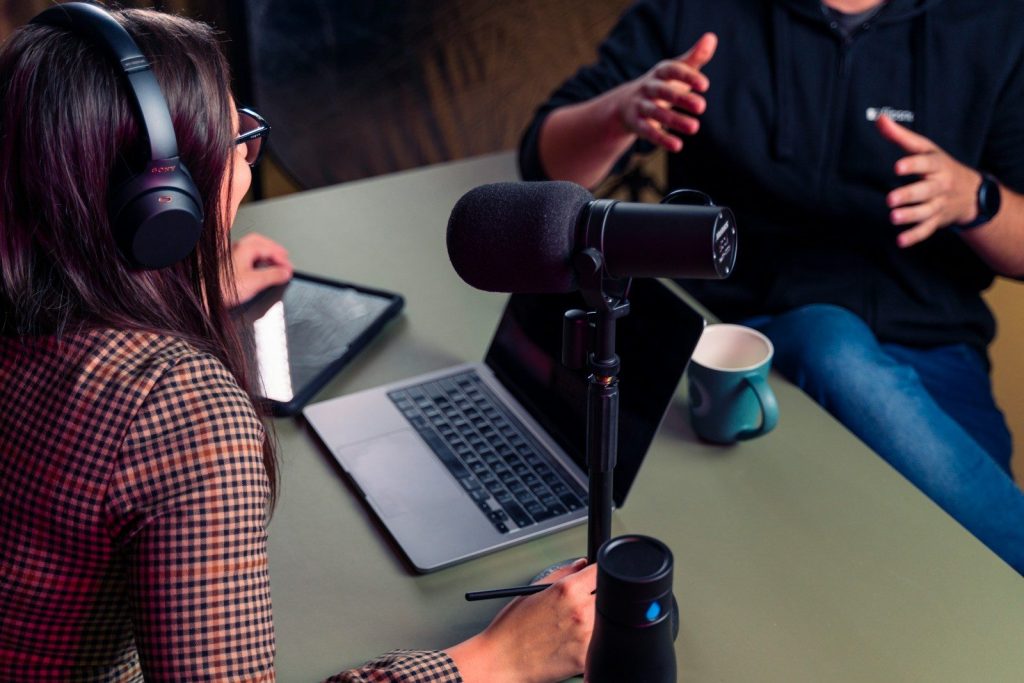
I don’t want you to record an episode and then question what comes next – because we know what comes next: you have to edit, write the shownotes, schedule the episode, publish, and promote it afterward, and then repeat. And yes, that is a lot for an indie podcaster.
So today, I am going to tell you how to build a system for your podcast that is repeatable and that will help you stay podcasting for years to come.
What Needs to Happen Before and After an Episode?
Let’s start at the beginning, before creating checklists or choosing the tools for your podcast process let’s actually map it out.
Here are the five stages:
Planning
- Choosing episode topics
- Research
- Guest outreach (if needed)
- Creating episode outline
- Preparing questions
- Scheduling the recording
Recording
- Guest preparation/pre-show meeting
- Recording
- Recording organization
Production
- Editing
- Video editing (if needed)
- Transcription
- Write shownotes
- Episode title
- Audio clips/video clips
Publishing
- Upload episode file to podcast host
- Add shownotes and necessary links
- Schedule episode
Promotion
- Social media posts
- Blog content
- Threads
- Newsletter/Email list
An efficient system cannot be built without knowing what the system is actually supposed to accomplish.
How to Create a Repeatable Podcast Workflow for Indie Podcasters That Actually Works
The steps are layed out, now it’s time to put them in a chronological order for the podcast workflow.
- Topic
- Outline
- Record
- Edit
- Transcribe
- Write shownotes
- Schedule
- Promote
- Repurpose content
Depending if you’re show changes between interview and solo episodes the process stays mostly the same.
From this list you can create an SOP or Standard Operating Procedure. It’s doesn’t have to be complicated – just a simple checklist is enough.
I actually have a checklist that I created in Trello to make sure I don’t miss any steps in my own podcast workflow.
Batch Similar Tasks
One of the best productivity hacks for podcasting is to batch similar tasks together. Instead of doing: Record, Edit, Write Show Notes, Schedule, Promote
You can do:
Monday & Tuesdays: Record two to three episodes
Wednesday: Editing, create graphics, and video clips
Thursday: Write shownotes and schedule
Friday: Promote
I have always suggested to clients to not record and edit in the same day because they require different mindsets. Think about it – switching from task to task throughout the podcast process on the same day requires a lot of mental engery. And can lead to burn out quickly.
Batching will help balance podcasting with all other responsibilities like kids, the home, and maybe you have a corporate job just like me.
For my solo podcast I record the episodes on Tuesdays, edit, write shownotes and schedule on Wednesdays, and release on Thursdays. I’ll write and publish the blog post on Friday or Saturday, depending on how much client work I have that week. Spreading podcasting tasks out like that helps so it doesn’t become overwhelming.
Repurpose One Episode Into Multiple Pieces of Content
Podcasting is long-form content and it can be repurposed in so many different ways. Which is one I help my clients see that their one episode isn’t one piece of content – it’s the main content where all the pieces come from.
For example – one episode can be used:
- Blog Post
- Email Newsletter
- LinkedIn Post
- Instagram Post
- Instagram Story
- Short-form video clip (IG Reel, TikTok, YouTube Shorts)
- Audiogram
- Quote Graphic
- Threads Post
This will truly help you stop creating social media content from scratch. And since your podcast episodes are evergreen you can post about the same episodes 3 to 4 weeks later. So the more episodes you have the more you can mix it up.
You also don’t have to start from scratch to repurpose the content either. One of the tips that I give constantly is that you can use your podcast transcription, upload it to ChatGPT, and ask to provide a blog post outline from the transcript. Then you write the blog post in your own words. Now, let’s take it a step further, from that blog post, select about 5 quotes, turn them into graphic posts for Instagram. And you can create pins for Pinterest and link either the blog post or the podcast episode directly.
The Tech That Supports The System
Alright, let’s look at the tools that can help you build the system for consistency. Use this to also audit your current tools and see if you can make any changes.
Recording: Riverside, Zoom, Voice memo on your phone, Garage Band, or Zoom recorder device.
Equipment: Dynamic microphones, cameras
Editing: Riverside, CapCut, Descript, Final Cut Pro, Audacity
Audio Processing: Auphonic
Podcast Hosting: Buzzsprout, PodBean, Simplecast
Project Management: Trello, Notions, Clickup, Asana
Design/Graphics: Canva (Please no AI for the graphics so many people are complaining about them and they all look the same)
This list is suggestions to help you get started. I use Trello to organize my content ideas and within each card, I have a checklist so I make sure I don’t miss a step. Create a system that works for you and that you can keep.
Create Templates Wherever Possible
One of the best ways to save time in your podcast process is to create templates for everything you can. For example:
- Guest outreach emails
- Guest preparation emails (or this is can be added to the scheduling softwear you use)
- Guest intake form
- Show notes
- Episode graphics (create the templates in Canva)
- Publishing checklist
- Guest follow up (if needed)
I have a shownotes template that I use. There is one template for each podcasts because one of the podcasts I host is interview based and the other is only me, but I just change what I need to change to make it relevant for that episode.
As mentioned above, I use Trello to organize my podcast content and within each card I have a checklist so I don’t miss any steps. And lastly, I have episode graphic templates created in Canva so I just change the guest’s picture and name. It makes things so much easier than creating from scratch for each episode.
Build The System Before You Need It
Do not make the rookie mistake I did in the beginning of my podcasting journey, I didn’t create my systems until I needed them. I used to keep track of my episode schedule in my Google calendar on my phone and one day a guest had to change her episode and I had to manually change over 30 episodes – it was a headache.
After that I created a Google Spreadsheet to keep track of my publishing schedule and now I can tell my guests the exact date their episode will be released since they are released in the same order they are recorded. Life is so much easier!
This will also help when your podcast grows and you outsource certain podcasting tasks. It will be easy to explain and outsource because there is a system in place.
The Goal Is To Build a Podcast You Can Produce For Years
Do not think that you are married to this system once it’s established. If you find that something isn’t working, change it. And as your podcast grows your systems may need upgrading as well.
That’s the great thing about podcasting – as the creative director of your show – you call the shots.
Remember, the goal is to build a podcast you can produce for years so you can grow your business, your personal brand, and reach all your podcasting goals. Podcasting is a long-term system that needs consistency to get traction if you don’t already have a large following, but reaching all your goals is absolutely possible with podcasting.
Comments are closed