


Power books have a way of finding us exactly when we need them—landing in our hands like a friend who shows up with wine and wisdom on the night you were about to spiral.
Maybe you’ve experienced this. You’re stuck in a pattern you can’t seem to break. You’re undercharging, over-giving, hiding from visibility, or burning yourself out trying to prove you’re enough. And then someone recommends a book, or you stumble across one in a bookstore, and suddenly the words on the page are speaking directly to your soul. Naming the thing you couldn’t name. Offering a pathway you couldn’t see.
In our pillar article on self-sabotage, we explored the seven signs that you might be getting in your own way as a woman entrepreneur. In our companion piece on famous female entrepreneurs, we saw how women like Oprah, Sara Blakely, Arianna Huffington, and Brené Brown overcame the same patterns that plague so many of us.
Now it’s time to give you the tools they used.
Because here’s what I’ve learned from years of doing this work alongside ambitious women: Mindset shifts don’t happen through willpower alone. They happen through exposure to new ideas, frameworks, and perspectives that gradually rewire how you see yourself and what’s possible. And books—the right books, read at the right time—are one of the most powerful delivery systems for that rewiring.
This isn’t just a reading list. It’s a carefully curated collection of books organized by the specific self-sabotage pattern they address. Whether you’re battling perfectionism, imposter syndrome, people-pleasing, burnout, fear of visibility, or chronic undervaluing, there’s a book here that will meet you where you are and help you move forward.
Consider this your personal library for becoming unstoppable.
What Makes a Book a “Power Book”?
Before we dive into the list, let’s talk about what elevates a book from “good read” to genuine power book status.
A power book doesn’t just inform—it transforms. It doesn’t just present ideas—it shifts something inside you. After reading it, you see yourself, your business, or your patterns differently. You have new language for old struggles. You have frameworks you can actually implement. You feel less alone and more equipped.
The power books on this list share a few common characteristics:
They’re written from experience, not just theory. The authors have walked through the fire they’re describing. They’re not academics observing from a distance—they’re fellow travelers offering hard-won wisdom.
They name what we often can’t name ourselves. The best power books put words to the vague discomfort, the unnamed fear, the pattern we couldn’t quite articulate. That naming alone is liberating.
They offer practical pathways, not just inspiration. Feeling motivated is nice. Having actual tools, strategies, and frameworks you can implement? That’s what creates lasting change.
They speak to women’s specific experiences. While some books on this list have universal appeal, the collection as a whole acknowledges that women entrepreneurs face unique challenges—systemic barriers, socialized patterns, and double standards that require specific strategies to navigate.
Now, let’s get to the books.
For Overcoming Perfectionism and Upper-Limiting
If your self-sabotage pattern involves perfectionism—endlessly polishing instead of publishing, waiting until everything is “just right,” or unconsciously creating problems when you get close to a new level of success—these are for you.
The Big Leap by Gay Hendricks
This might be the most important book on this entire list. Hendricks introduces the concept of the “Upper Limit Problem”—our unconscious tendency to sabotage ourselves when we approach a new level of success, happiness, or fulfillment.
Here’s the idea: We each have an internal thermostat for how much good stuff we’ll allow ourselves to experience. When we exceed that setting—when things start going really well—we unconsciously create problems to bring ourselves back down to a familiar level. We pick fights. We get sick. We make careless mistakes. We procrastinate on the thing that would take us higher.
Sound familiar?
Hendricks doesn’t just diagnose the problem—he offers practical strategies for expanding your capacity for success. His concept of the “Zone of Genius” has helped countless women entrepreneurs stop playing small and start operating in their area of greatest impact.
Who should read this: Anyone who notices that good things trigger anxiety, who sabotages themselves at the edge of breakthroughs, or who suspects they’re capable of more than they’re currently allowing themselves.
Key takeaway: Your capacity for success is learned, not fixed. You can expand your upper limits—but first you have to recognize when you’re bumping against them.
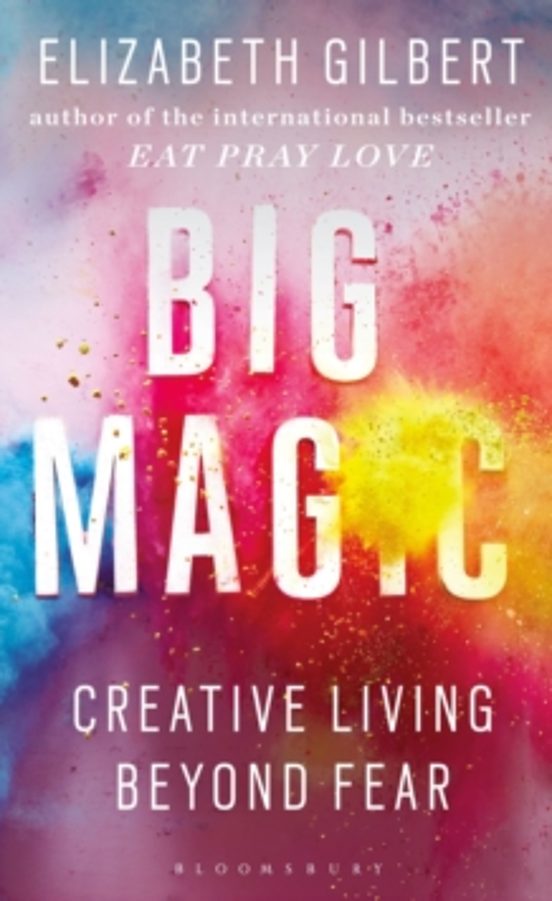
Big Magic by Elizabeth Gilbert
Elizabeth Gilbert wrote Eat, Pray, Love, but Big Magic might be her more important contribution to the world. This book is about creativity, fear, and the courage to pursue what calls to you—even when (especially when) you don’t feel qualified.
Gilbert’s central message is revolutionary for perfectionists: You don’t have to be fearless to create. Fear and creativity will always coexist. The goal isn’t to eliminate fear—it’s to stop letting it drive. She uses the metaphor of fear as a passenger in your car: It can come along for the ride, but it doesn’t get to touch the radio, and it definitely doesn’t get to drive.
This book is permission. Permission to create imperfect things. Permission to pursue ideas without knowing where they’ll lead. Permission to be an amateur, a beginner, a woman who doesn’t have it all figured out but is brave enough to try anyway.
Who should read this: Perfectionists who struggle to ship, share, or put their work into the world. Women who wait until they feel ready (spoiler: you’ll never feel ready). Anyone whose fear is currently in the driver’s seat.
Key takeaway: Perfectionism is fear wearing a really good disguise. You don’t have to be fearless—you just have to be willing to create alongside your fear.
Mindset by Carol Dweck
Carol Dweck’s research on fixed versus growth mindsets has become foundational knowledge in personal development—but if you haven’t read the original book, you’re missing the depth behind the buzzwords.
A fixed mindset believes that abilities are static: You’re either smart or you’re not, talented or you’re not, good at business or you’re not. A growth mindset believes that abilities can be developed through effort, learning, and persistence.
For perfectionists, this distinction is everything. Perfectionism often stems from a fixed mindset that equates your work with your worth. If the project fails, you fail. If it’s not perfect, you’re not good enough. The growth mindset liberates you from this trap: Failure becomes data. Imperfection becomes a stage in the learning process. Your worth becomes independent from your output.
Who should read this: Anyone whose perfectionism is rooted in fear of being exposed as “not good enough.” Women who take failure personally. Entrepreneurs who need to rebuild their relationship with mistakes.
Key takeaway: When you believe you can grow and learn, imperfection stops being threatening and starts being instructive.
For Building Self-Worth and Overcoming Imposter Syndrome

If you struggle with feeling like a fraud, questioning whether you deserve your success, or chronic undervaluing of your skills and contributions, these power books will help you build unshakeable self-worth from the inside out.
You Are a Badass by Jen Sincero
Let’s be honest: Sometimes you need a book that grabs you by the shoulders, looks you in the eye, and tells you to stop playing small. You Are a Badass is that book.
Jen Sincero’s irreverent, no-nonsense approach to building self-worth has resonated with millions of women—and for good reason. She doesn’t coddle. She doesn’t do toxic positivity. She calls out our self-defeating patterns with humor and compassion, then offers practical strategies for rewiring them.
Among power books for imposter syndrome, this one stands out for its accessibility. Sincero isn’t an academic or a researcher—she’s a woman who spent years broke and stuck, figured out how to change her life, and wrote a book about what worked. Her voice is like that friend who tells you the truth you need to hear, even when it’s uncomfortable.
Who should read this: Women who know they’re playing smaller than they should but can’t seem to stop. Anyone who needs a kick in the pants alongside the compassion. Entrepreneurs stuck in undercharging patterns rooted in low self-worth.
Key takeaway: Your beliefs about yourself create your reality. Change the beliefs, change the reality.
The Gifts of Imperfection by Brené Brown
If you’ve been swimming in imposter syndrome, chances are you’ve also been chasing an impossible standard of perfection that’s keeping you feeling perpetually inadequate. Brené Brown’s The Gifts of Imperfection is the antidote.
Based on years of research into shame and vulnerability, Brown offers ten guideposts for “wholehearted living”—a life rooted in worthiness rather than constant striving to prove you’re enough. She tackles perfectionism, comparison, scarcity thinking, and the exhausting performance of having it all together.
What makes this book powerful is Brown’s willingness to share her own struggles alongside the research. She’s not preaching from a mountain—she’s sitting beside you in the mess, saying “me too” and “here’s what helped.”
Who should read this: Women whose imposter syndrome is intertwined with perfectionism and people-pleasing. Anyone who believes they’ll feel worthy “when”—when they hit the goal, get the client, reach the milestone. Entrepreneurs who are exhausted from performing confidence they don’t feel.
Key takeaway: Worthiness isn’t earned through achievement. It’s your birthright, waiting to be claimed.
Playing Big by Tara Mohr
Tara Mohr’s Playing Big is specifically written for women who are ready to stop hiding and start having the impact they’re capable of—which makes it essential reading for women entrepreneurs battling self-doubt.
Mohr introduces the concept of the “inner critic” (which she distinguishes from the “inner mentor”) and offers practical strategies for working with both. She addresses the specific ways women are socialized to play small—to qualify our statements, downplay our expertise, and wait for permission that never comes.
One of the most valuable frameworks in this book is Mohr’s distinction between “feedback” and “criticism.” Learning to take in useful feedback while protecting yourself from destructive criticism is a game-changer for anyone whose imposter syndrome gets triggered by negative responses.
Who should read this: Women entrepreneurs who want to increase their visibility but feel held back by self-doubt. Anyone who qualifies their expertise, hedges their opinions, or waits for external validation. Women who know they’re meant for bigger things but don’t know how to claim them.
Key takeaway: Playing big isn’t about being bigger, louder, or more aggressive. It’s about bringing more of your true self to your work and releasing what holds you back.
For People-Pleasers and Boundary Strugglers
If your self-sabotage pattern involves saying yes when you mean no, over-giving to the point of depletion, or shaping yourself to fit others’ expectations, these will help you reclaim your boundaries and your self.
The Seat of the Soul by Gary Zukav
This book changed Oprah’s life—and she’s talked about it extensively. The Seat of the Soul is about authentic power: power that comes from within rather than from external validation, control, or approval.
For people-pleasers, this distinction is transformative. Much of people-pleasing is driven by what Zukav calls “external power”—trying to control how others perceive us, trying to earn love through performance, trying to feel safe by making everyone happy. Authentic power, by contrast, comes from aligning your personality with your soul—making choices based on your inner truth rather than external pressures.
This is a spiritual book, and it won’t resonate with everyone. But for women who are ready to explore the deeper “why” behind their people-pleasing patterns, it offers profound insights.
Who should read this: Women whose people-pleasing is rooted in deep patterns around worthiness, safety, and belonging. Entrepreneurs who’ve built businesses that serve everyone but themselves. Anyone ready for a deeper exploration of what drives their self-sabotage.
Key takeaway: True power doesn’t come from getting others to approve of you. It comes from trusting yourself.
Set Boundaries, Find Peace by Nedra Glover Tawwab
If The Seat of the Soul is the philosophical foundation, Set Boundaries, Find Peace is the practical manual. Therapist Nedra Glover Tawwab delivers exactly what the title promises: clear, actionable guidance on setting boundaries in every area of your life.
Among power books for people-pleasers, this one stands out for its specificity. Tawwab doesn’t just tell you that you need boundaries—she shows you exactly how to set them. She provides scripts for difficult conversations. She addresses the fear of conflict that keeps so many of us from protecting our time, energy, and well-being.
What makes this book particularly valuable for women entrepreneurs is its recognition that boundaries aren’t just personal—they’re professional. Boundaries with clients, with team members, with business partners, with the endless demands on your attention. If you’re burned out from over-giving in your business, this book will show you another way.
Who should read this: Women who know they need better boundaries but don’t know how to set them. Entrepreneurs who say yes to everything and then resent their own calendar. Anyone who avoids difficult conversations and pays the price.
Key takeaway: Boundaries aren’t mean, selfish, or unkind. They’re necessary for healthy relationships—including your relationship with yourself.
Untamed by Glennon Doyle
Untamed is less a self-help book and more a battle cry for women who are done being good at the expense of being free. Glennon Doyle’s memoir-meets-manifesto is about releasing the expectations that have kept you caged and trusting your own knowing.
For people-pleasers, this book is liberating and terrifying in equal measure. Doyle challenges the good-girl conditioning that so many of us absorbed—the belief that being lovable means being agreeable, that being successful means being selfless, that being a good woman means meeting everyone’s needs but your own.
Her central metaphor—the cheetah who was trained to chase a stuffed bunny instead of running free—captures the tragedy of a life lived for others’ approval. And her invitation is clear: It’s time to stop chasing fake bunnies and remember what it feels like to run.
Who should read this: Women who’ve contorted themselves to fit expectations and lost themselves in the process. Entrepreneurs who’ve built businesses around what they “should” do rather than what lights them up. Anyone who needs permission to want what they want.
Key takeaway: You are not here to be good. You are here to be free, to be yourself, to trust your own voice—even when it contradicts everything you’ve been taught.
For Overcoming Burnout and Hustle Culture
If your self-sabotage pattern involves working yourself to exhaustion, measuring your worth by your productivity, or believing you’ll rest “when you’ve earned it,” these will help you build sustainable success.
Thrive by Arianna Huffington
After her burnout-induced collapse (which we explored in Article 2), Arianna Huffington wrote Thrive to redefine success for herself and for women everywhere.
The book challenges the cultural definition of success as money and power alone, proposing a “Third Metric” that includes well-being, wisdom, wonder, and giving. Huffington argues—with research, personal stories, and practical strategies—that sustainable success requires taking care of yourself, not sacrificing yourself.
For women entrepreneurs who wear busy as a badge of honor, this book is a necessary corrective. It’s not anti-ambition—it’s anti-destruction. You can build something extraordinary AND sleep. You can be wildly successful AND have a life outside your business. In fact, the second is required for the first to last.
Who should read this: Entrepreneurs who believe rest is for later, who measure their value by their output, who are flirting with (or already experiencing) burnout. Women who need permission to prioritize their well-being alongside their ambition.
Key takeaway: Success that destroys you isn’t success. Redefine winning to include thriving.
The Sleep Revolution by Arianna Huffington
Yes, another Arianna Huffington book—because the woman who collapsed from exhaustion became one of the most compelling advocates for rest. The Sleep Revolution makes the scientific and cultural case for something we’ve been taught to deprioritize: sleep.
This isn’t a soft, optional wellness book. Huffington brings receipts—research showing how sleep deprivation affects decision-making, creativity, emotional regulation, and physical health. She dismantles the myth that successful people don’t need sleep, profiling high performers who prioritize it.
For women entrepreneurs who sacrifice sleep to get more done, this book reframes the equation: You’re not being more productive by sleeping less. You’re sabotaging your capacity to do your best work.
Who should read this: Night owls who wear their sleep deprivation as a badge of honor. Entrepreneurs who “don’t have time” for adequate rest. Anyone who needs scientific evidence to justify taking care of themselves.
Key takeaway: Sleep isn’t a luxury—it’s a necessity for high performance. Protect it accordingly.
Rest by Alex Soojung-Kim Pang
If The Sleep Revolution makes the case for sleep specifically, Rest makes the case for rest more broadly. Alex Soojung-Kim Pang explores the role of deliberate rest in the creative and productive lives of history’s greatest minds.
The counterintuitive finding? The most prolific creators didn’t work more hours—they worked fewer, more focused hours, and they rested deliberately and strategically. Rest wasn’t the absence of work; it was its essential complement.
For women entrepreneurs who feel guilty when they’re not working, this book reframes rest as a productivity strategy, not a productivity obstacle. You’re not resting despite wanting to succeed—you’re resting because you want to succeed.
Who should read this: Entrepreneurs who struggle to take breaks without guilt. Women who believe more hours equals more success. Anyone who needs permission to do less in order to accomplish more.
Key takeaway: Rest isn’t the enemy of achievement—it’s the secret weapon of sustainable high performers.
For Increasing Visibility and Overcoming Fear of Being Seen
If your self-sabotage pattern involves hiding from opportunities, avoiding self-promotion, or dimming yourself to avoid criticism, these power books will help you step into the spotlight you’ve been avoiding.
Daring Greatly by Brené Brown
We mentioned The Gifts of Imperfection earlier, but Daring Greatly deserves its own spotlight—especially for women whose self-sabotage centers on visibility avoidance.
The title comes from Theodore Roosevelt’s “man in the arena” speech, and the book is an exploration of why vulnerability is strength, not weakness. Brown argues that showing up and being seen—really seen, imperfect and uncertain—is the birthplace of connection, creativity, and courage.
For women entrepreneurs who hide because being visible feels too risky, this book reframes the equation. Yes, being seen means you might be criticized. But not being seen means you definitely won’t have the impact you’re capable of. The question becomes: Is your fear of criticism worth sacrificing your potential contribution?
Who should read this: Women who avoid visibility, self-promotion, or opportunities to be publicly associated with their expertise. Entrepreneurs who know they should be more visible but can’t seem to make themselves do it. Anyone whose fear of judgment is keeping them small.
Key takeaway: Vulnerability isn’t weakness—it’s the courage to be seen when there’s no guarantee of the outcome.
Show Your Work by Austin Kleon
Austin Kleon’s Show Your Work is a short, practical guide to sharing your creative process—and it’s perfect for women entrepreneurs who intellectually understand the importance of visibility but don’t know how to do it without feeling gross.
Kleon reframes self-promotion as sharing, not bragging. Instead of shouting about how great you are, you invite people into your process. You show what you’re working on, what you’re learning, what you’re struggling with. This approach feels more authentic—and ironically, it’s often more effective at building an audience than polished self-promotion.
Among power books for visibility, this one is notable for its accessibility. It’s short, illustrated, and highly actionable. You could read it in an afternoon and start implementing immediately.
Who should read this: Women entrepreneurs who cringe at traditional self-promotion. Anyone who has expertise to share but doesn’t know how to share it without feeling like a used car salesperson. Introverts who want to be more visible without pretending to be extroverts.
Key takeaway: You don’t have to be a self-promotional extrovert to be visible. You just have to be willing to share what you’re working on and learning.
Bossypants by Tina Fey
Okay, Bossypants isn’t a traditional personal development book—it’s a memoir-ish comedy book by Tina Fey. But stay with me, because there’s something uniquely valuable here for women struggling with visibility.
Fey writes about being a woman in comedy, leading SNL’s writers room, navigating Hollywood, and handling the criticism that comes with being a visible woman. She does it with humor, self-deprecation, and refreshing honesty about the absurdity of it all.
The magic of this book is that it normalizes imperfection and visibility in a way that more earnest self-help books sometimes can’t. Fey isn’t telling you how to be seen perfectly—she’s showing you that being seen while imperfect, while criticized, while figuring it out, is not only survivable but can be hilarious.
Who should read this: Women who need to laugh at themselves and the absurdity of visibility anxiety. Entrepreneurs who take themselves too seriously. Anyone who needs to see that successful, visible women are just as messy and uncertain as the rest of us.
Key takeaway: You can be visible, imperfect, criticized, and still successful—and you can laugh about it along the way.
For Resilience and Rising After Failure
If you’ve experienced a setback—a failed launch, a lost client, a business that didn’t make it—these power books will help you rise, rebuild, and come back stronger.
Rising Strong by Brené Brown
We’ve mentioned Brené Brown several times (she’s that important), and Rising Strong is her book specifically about the process of getting back up after failure.
Brown identifies three phases of rising strong: The Reckoning (recognizing when we’re hooked by emotion), The Rumble (getting honest about the stories we’re telling ourselves), and The Revolution (writing a new ending based on truth rather than defense).
For women entrepreneurs who’ve been knocked down—by failure, criticism, or circumstances beyond their control—this book offers a roadmap for recovery that honors the hurt while pointing toward what comes next.
Who should read this: Anyone recovering from a professional or personal setback. Entrepreneurs whose confidence has been shaken. Women who feel stuck in the story of their failure and don’t know how to write a new chapter.
Key takeaway: Falling is part of living. The only question is: What happens when you get back up?
Option B by Sheryl Sandberg and Adam Grant
Sheryl Sandberg wrote Option B after the sudden death of her husband—so this isn’t a book about professional failure specifically. But its insights about building resilience, finding meaning after loss, and moving forward when the life you planned disappears are universally applicable.
Sandberg and co-author Adam Grant draw on research to identify three factors that determine resilience: personalization (believing the setback is your fault), pervasiveness (believing the setback affects all areas of your life), and permanence (believing the setback will last forever). Learning to challenge these beliefs is key to bouncing back.
For women entrepreneurs who’ve experienced significant setbacks, this book offers both comfort and strategy—acknowledging that pain is real while insisting that recovery is possible.
Who should read this: Anyone who’s experienced a significant loss or failure and is struggling to move forward. Entrepreneurs whose setbacks feel all-consuming. Women who need permission to grieve while also needing tools to rebuild.
Key takeaway: When Plan A falls apart, there’s still Plan B—and you have more agency in shaping it than you might think.
Man’s Search for Meaning by Viktor Frankl
Viktor Frankl’s account of surviving the Nazi concentration camps and finding meaning even in the most horrific circumstances has been transforming readers since 1946. It’s one of the most influential power books ever written—and its lessons apply far beyond its specific context.
Frankl’s central insight is that while we can’t always control what happens to us, we can control how we respond. Finding meaning—through work, love, or the attitude we bring to suffering—is the pathway to not just surviving but truly living.
For women entrepreneurs who’ve faced circumstances they couldn’t control—market crashes, pandemic pivots, personal crises—this book offers perspective. Your circumstances don’t have to determine your response. Even in the darkest chapters, meaning can be found or created.
Who should read this: Anyone seeking perspective on their struggles. Entrepreneurs facing circumstances beyond their control. Women who need a reminder that their agency lies not in what happens to them but in how they respond.
Key takeaway: Those who have a “why” to live can bear almost any “how.”
For Understanding Your Mind and Making Better Decisions
If your self-sabotage is tied to cognitive patterns—impulsive decisions, unconscious biases, or thinking traps—these will help you understand and upgrade your mental operating system.
Thinking, Fast and Slow by Daniel Kahneman
Nobel Prize-winning psychologist Daniel Kahneman’s Thinking, Fast and Slow is a masterwork on how our minds actually work—including the systematic errors we make without realizing it.
Kahneman distinguishes between two systems of thinking: System 1 (fast, intuitive, automatic) and System 2 (slow, deliberate, effortful). Much of our self-sabotage happens in System 1—we react rather than respond, we follow patterns rather than making conscious choices.
This is a dense book, and it rewards slow reading. But for women entrepreneurs who want to understand why they keep making the same mistakes, why their judgment fails them in predictable ways, or how to make better decisions under uncertainty, it’s invaluable.
Who should read this: Women entrepreneurs who want to understand the science of decision-making. Anyone whose self-sabotage patterns seem automatic and hard to interrupt. Entrepreneurs who want to think more clearly about their business.
Key takeaway: Your intuition is less reliable than you think—but you can learn to recognize when it’s likely to fail you.
Atomic Habits by James Clear
James Clear’s Atomic Habits has become a modern classic for good reason: It takes the science of behavior change and makes it practical, actionable, and sticky.
Clear’s framework for building good habits and breaking bad ones is directly applicable to self-sabotage. Many of our self-sabotaging behaviors are habitual—automatic responses that we engage without conscious choice. Clear’s strategies for habit stacking, environment design, and identity-based habit change offer concrete pathways for interrupting those patterns.
This book pairs particularly well with the first article in this series, which identified the signs of self-sabotage. Once you know your patterns, Atomic Habits gives you tools for changing them.
Who should read this: Anyone whose self-sabotage shows up as habitual behavior they can’t seem to stop. Entrepreneurs who want to build consistent practices that support their goals. Women who’ve tried to change their patterns through willpower alone and found it doesn’t stick.
How to Get the Most from Your Power Books
A quick note on actually implementing what you read—because collecting books doesn’t create change. Reading books doesn’t even create change. Implementing what you learn creates change.
Here’s how to get maximum impact from your books:
Read with a Pen
Don’t just passively consume. Underline passages that resonate. Write questions in the margins. Note the specific practices you want to try. Your book should look used when you’re done with it.
Extract Three Actions
After finishing any book, identify three specific actions you’re going to take based on what you learned. Not vague intentions—concrete actions with timelines. “I’m going to set up a sleep schedule by Friday.” “I’m going to use the STOP technique when I notice my perfectionism.” “I’m going to raise my rates for the next proposal I send.”
What’s Next
Ready to keep going? Here’s where to go from here:
- Recognize the patterns: Read our comprehensive guide on the 7 signs of self-sabotage.
- A deep dive into low self-esteem: Read our comprehensive guide on the 7 signs of self-sabotage
- Get inspired: See how famous female entrepreneurs overcame their own self-sabotage patterns.

Comments are closed