

Inspirational women in history still matter because the tension between serving others and honoring ourselves has never really gone away. Women are still taught, both subtly and explicitly, that being “good” means giving more, carrying more, absorbing more, and asking for less. Even now, with all our language around empowerment and balance, many women still feel guilty when they choose themselves. You can hear it in the way women talk about rest, ambition, boundaries, and success.
That is what makes the stories of these inspirational women in history feel so relevant now. Not because they were perfect and not because they found some effortless balance, but because they lived inside the same push and pull so many women still feel today. They understood that self-empowerment and service are not opposing forces. In many cases, one made the other possible.
I still see that tension everywhere. Younger women building businesses are still carrying guilt. Older women are still trying to untangle the belief that their value is tied to how much they can do for everyone else. So maybe the lesson is not just to admire these women from a distance. Maybe it is to study how they sustained themselves, how they claimed their space, and how they refused to disappear inside their own service.
Let’s look at a few inspirational women in history who lived that tension in real, imperfect, powerful ways—and what their stories still have to teach us now.
Harriet Tubman: Freedom Fighter Who Knew When to Work With Her Limits
Harriet Tubman is often celebrated for her extraordinary courage in leading more than 70 enslaved people to freedom through the Underground Railroad. What gets discussed less often is how she sustained herself through work that was dangerous, exhausting, and physically demanding.
Tubman lived with narcolepsy and severe headaches caused by a traumatic head injury she suffered in her youth. She could have seen her condition as a limitation that disqualified her from leadership. Instead, she learned to work with her body, not against it. She planned her rescue missions with care, relied on trusted allies, built strong networks of support, and understood that her survival was essential to her mission.
Tubman did not minimize her health struggles to appear stronger. She acknowled all right all right I am going through okay Do my shit togetherged them and strategized around them. That self-awareness did not make her weaker. It made her more effective. It is one of the most important lessons inspirational women in history still offer us now.
Her story is also deeply tied to New York. After her work on the Underground Railroad, Tubman made her home in Auburn, where she continued her activism, supported her community, and built a lasting legacy that remains rooted in New York State today.
And maybe that is where her story feels especially modern. Women are still taught that resilience means pushing through, hiding discomfort, and carrying on as if the body has nothing to say. We are often conditioned to believe that strength looks like silence. Keep working. Keep showing up. Do not complain. Do not slow down. Do not let anyone see the cost.
But Harriet Tubman’s example suggests something far more radical: real strength is not pretending you are unaffected. It is knowing yourself well enough to lead from truth. Even now, women move through workspaces and systems that were not built with them in mind. They push through pain, exhaustion, stress, and burnout just to prove they can keep up. Tubman’s way of being reminds us that acknowledging what your body needs is not weakness. It is wisdom. Sustainable leadership has always required more than endurance. It requires self-trust.
Mary McLeod Bethune: Education as Self-Love and Community Service
Born to formerly enslaved parents in 1875, Mary McLeod Bethune understood that education was liberation. She founded the Daytona Beach Literary and Industrial Training School for Negro Girls in 1904, which eventually became Bethune-Cookman University.
But Bethune didn’t just build institutions for others. She invested deeply in her own education, her own voice, and her own leadership development. She became an advisor to President Franklin D. Roosevelt and founded the National Council of Negro Women. She understood that her personal growth directly expanded her capacity to serve.
Bethune once said, “Invest in the human soul. Who knows, it might be a diamond in the rough.” She applied this wisdom to herself first—polishing her own diamond so it could illuminate paths for thousands of others.
Clara Barton: The Healer Who Understood That Restoration Is Part of Service
Clara Barton founded the American Red Cross in 1881 after years of nursing soldiers during the Civil War. She was relentless in her service, often working until she collapsed from exhaustion.
And that is what makes her story feel so relevant now.
Barton experienced severe depression and burnout multiple times throughout her life. Rather than hiding that struggle forever, she eventually learned to step back, seek treatment, and prioritize recovery. She took extended breaks from her work when necessary and accepted that her mental health required care and attention.
That was not weakness. It was wisdom. Barton’s willingness to acknowledge her own needs is part of what allowed her to keep serving for decades. She lived to 90 and remained active in humanitarian work into her later years.
Clara Barton’s legacy also has a meaningful New Jersey connection. Before founding the American Red Cross, she opened one of New Jersey’s first free public schools in Bordentown, helping expand access to education and leaving an early mark on the state’s history of women-led public service.
How many of us have heard some version of the phrase, fill your own cup first so you can keep pouring into others? That idea could easily sit beside Clara Barton’s story. Women are still praised for running on empty as if depletion is proof of devotion. We stay late at the office to finish the project even when our body is asking us to go home. We answer emails from bed instead of resting. We keep the family calendar moving, the lunches packed, the appointments made, the emotional temperature of the household regulated. Business owners do it too, pushing through client work, launches, deadlines, and invisible labor while telling themselves they will rest later.
But later has a way of never arriving.
What Clara Barton’s life reminds us is that care is not separate from service. Restoration is part of it. The woman who keeps giving without pause is not necessarily the strongest one. Sometimes the wisest woman in the room is the one who recognizes the cost, steps back before she breaks, and understands that sustainability is what allows her to keep showing up for the long haul.
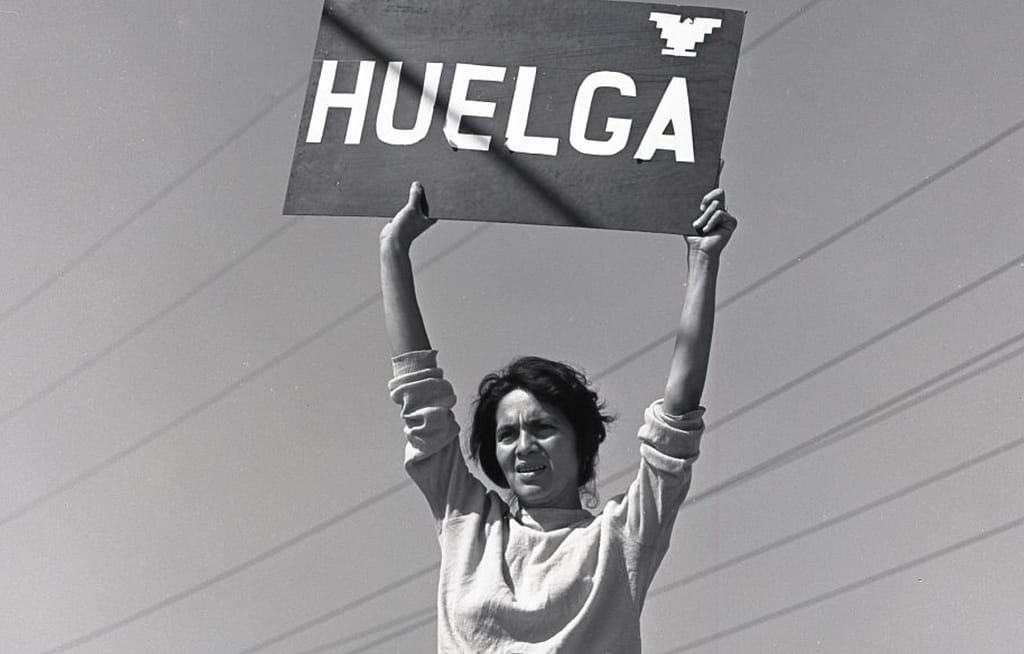
Dolores Huerta: Fierce Advocacy Rooted in Self-Worth
Dolores Huerta co-founded the United Farm Workers alongside César Chávez, fighting tirelessly for the rights of agricultural workers. She organized strikes, negotiated contracts, and faced arrest multiple times. She raised eleven children while doing it.
What made Huerta so formidable? She possessed an unshakeable sense of her own worth and the worth of those she fought for. She coined the phrase “Sí, se puede”—yes, we can—which became a rallying cry for generations.
Huerta understood that advocating for others required first believing she had every right to speak, to lead, to take up space. Her confidence wasn’t arrogance. It was the foundation that made her advocacy possible.
What These Inspirational Women in History Teach Us Today
Notice the common thread running through these stories. Each of these inspirational women in history understood something we often forget: caring for yourself is not selfish. It’s strategic. It’s necessary. It’s what allows sustained, meaningful impact.
They didn’t sacrifice themselves on the altar of service. They built themselves up so they could lift others higher.
In our current moment—when communities need support, when systems need changing, when neighbors need compassion—this lesson matters more than ever. You are not required to destroy yourself to make a difference. In fact, doing so ultimately limits what you can contribute.
Lessons for Modernity
So how do we apply these lessons? Start here:
Protect your energy, just like Tubman protected her routes. Be strategic about what you take on, but also pay attention to what your body is telling you. Real strength is not pretending you can push through everything. It is learning how to work with yourself, not against yourself.
Invest in your growth, just as Bethune invested in education. Read, learn, develop your skills, and keep expanding your voice. Your growth is not separate from your service. It is part of what strengthens it.
Acknowledge your limits like Barton acknowledged hers. Rest is not a reward you earn after collapse. It is part of what allows you to keep showing up with clarity, steadiness, and care.
Claim your space like Huerta claimed hers. Your voice matters. Your perspective is needed. Stop apologizing for taking up room in conversations, communities, and causes that need your leadership.
The stories of inspirational women in history reveal a truth we still need to hear: self-empowerment and service are not competing priorities. They are intertwined. Harriet Tubman reminds us that sustainable leadership requires self-trust. Mary McLeod Bethune shows us that investing in ourselves expands what we can offer others. Clara Barton reminds us that restoration is part of service. Dolores Huerta proves that advocacy begins with knowing your own worth.
Right now, your community does not need the exhausted version of you, the burnt-out version of you, or the version of you that disappears in service of everyone else. It needs the version of you that is rooted, honest, and able to keep going.
So if you need the reminder, let it be this: take care of yourself without guilt. Protect your peace with intention. Build your strength on purpose. And from that place, give, lead, serve, and show up fully.