

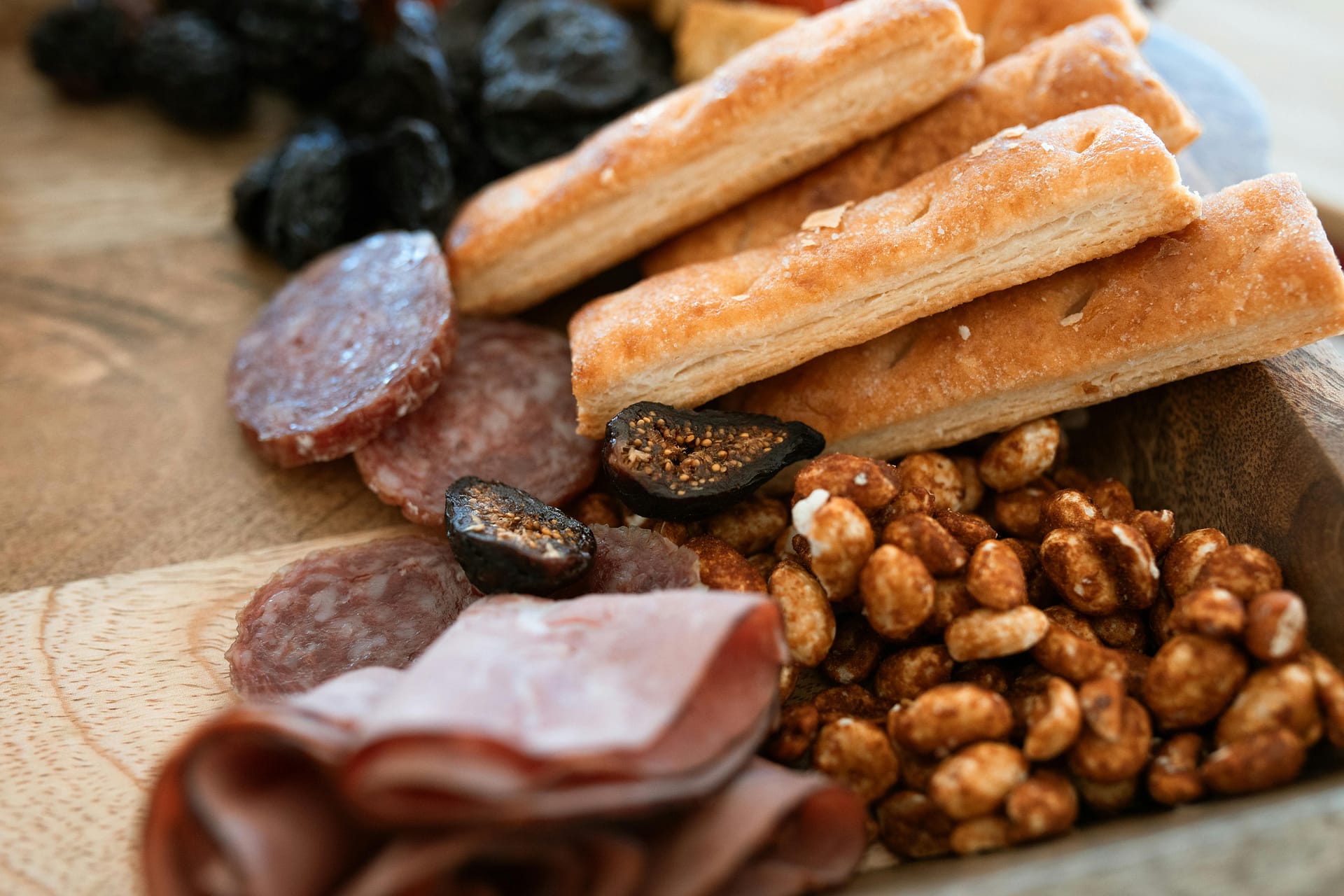
Crafting the perfect charcuterie board is both an art and a science, perfect for impressing guests at any gathering. With the right mix of flavors, textures, and presentation, you can craft a board that’s as beautiful as delicious. Here’s a comprehensive guide to building your perfect charcuterie board.
Why a Charcuterie Board?
Charcuterie boards are all the rage for so many reasons. First off, they are just plain fun to put together! Have you ever gotten lost in the gourmet wonderland of a swanky supermarket’s artisanal section? It’s like a treasure hunt for the perfect combination of meats, cheeses, pickles, jams, and more. It’s like building your edible masterpiece.
And speaking of that, it’s like a culinary art form – no two boards ever look the same! The creative possibilities are endless. Plus, let’s not forget how easy throwing one of these together is. It’s like a guaranteed hit with your guests, and who doesn’t love that?
Let’s Start Crafting the Perfect Charcuterie Board
Step 1: Select Your Board & Serving Dishes
The foundation of your charcuterie masterpiece starts with selecting the board itself. Whether it’s a rustic wooden slab, a sleek marble slab, or an antique platter, the board should be functional and fitting for the occasion. You can find boards of all shapes and sizes at your local TJ Maxx or Home Goods.
You’ll also need a series of small bowls and containers of different shapes to hold jams and other items and add interest to the design. You can use anything you already have at home, like small mason jars. Using a martini or coupe glass gives your board some height and beautifully holds olives or nuts.
Step 2: Gather the Essentials
Cured Meats
Choose a variety of meats such as salami, prosciutto, and summer sausage. These add rich flavors and hearty textures to your board.
Cheeses
A great charcuterie board includes at least three types of cheeses in varying textures and flavors. Options like Brie, Smoked Gouda, Pecorino Romano, Blue Cheese, and Cream Cheese are excellent choices.
Accompaniments
- Fruits: Fresh berries, grapes, and halved pomegranates add sweetness and vibrant color.
- Nuts: Herbed almonds and salted pistachios provide crunch.
- Olives & Pickles: The olive bar’s marinated olives and sweet peppers, mini dill pickles, and sweet-spicy pickles offer a tangy contrast.
- Dried Fruits: Apricots and pineapple chunks are perfect for a touch of natural sweetness.
- Crackers: Select a variety of shapes and flavors to complement your cheeses and spreads.
- Jams & Condiments: Add sweet and spicy jams, deli-style mustard, and honey to enhance flavors.
Step 3: Arrange Your Board
Begin by placing your cheeses on the board with accompanying cheese knives. Scatter small dishes or bowls to contain smaller items like olives and jams. Arrange meats around the cheeses, folding and fanning them for visual appeal. Fill in gaps with fruits, nuts, and crackers, balancing colors and textures for an artful result.
Step 4: Garnish and Serve
Add sprigs of fresh rosemary and thyme for aromatic flair. Ensure everything is easily accessible and consider labeling cheeses for guests with dietary preferences. To complete the setup, serve with cheese knives and little spoons to spread the condiments.
Creating a charcuterie board can be a delightful experience. It allows you to express creativity while crafting a centerpiece for gatherings. Remember, personalization is vital. Choose ingredients you love and let each element reflect your unique taste and style. Enjoy your culinary creation!