

The unveiling of the Barbara Rose Johns statue at the US Capitol marks a powerful moment of recognition for a young civil rights hero whose courage helped reshape American education. As a civil rights icon, Barbara Rose Johns led a pivotal protest at her segregated Virginia high school, igniting a legal battle that contributed to the landmark Brown v. Board of Education Supreme Court decision. This article explores key insights about Johns’ legacy and how the statue’s installation symbolizes progress and remembrance.
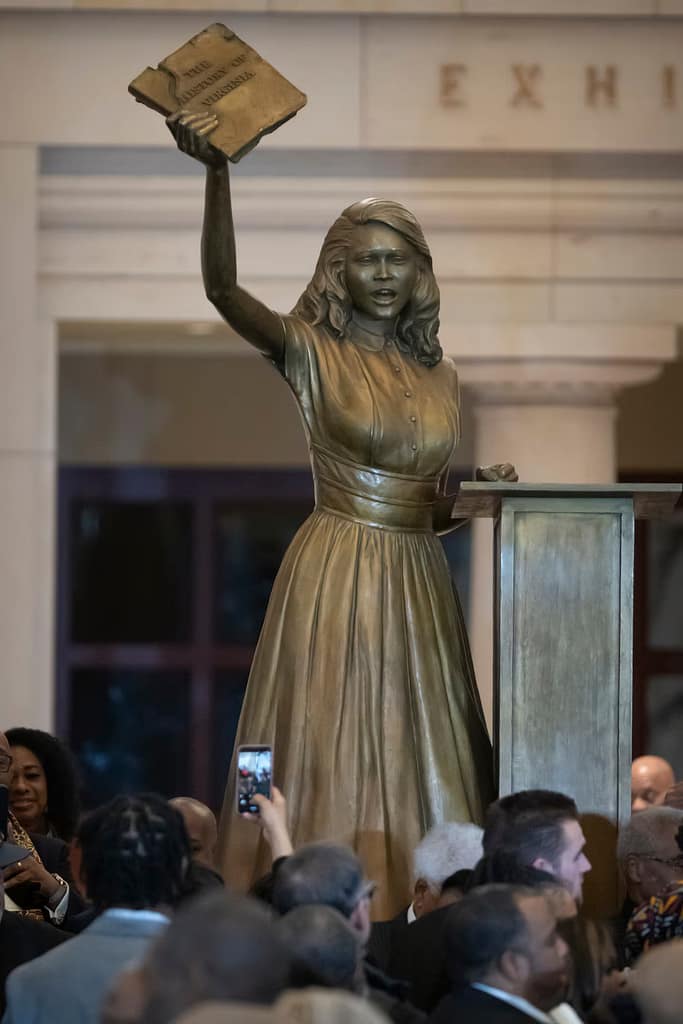
Image extracted from the Boston Globe webpage.
The Legacy of Barbara Rose Johns: A Teen Civil Rights Icon
At just 16 years old, Barbara Rose Johns demonstrated extraordinary leadership and bravery. In 1951, she organized a student strike protesting the unsafe and unequal conditions at Robert Russa Moton High School in Farmville, Virginia. The school was segregated and substandard, prompting young Johns to question the status quo and demand change. Her strike became a catalyst for legal action, helping the NAACP raise the challenge that ultimately culminated in Brown v. Board of Education — the Supreme Court ruling that declared racial segregation in public schools unconstitutional.
Johns’ activism exemplified the power of youth and the critical role of grassroots movements in civil rights. Her determination to fight “separate but equal” was not only courageous but transformed American society by pushing toward greater equality and justice.
Symbolism and Significance of the Statue
The Barbara Rose Johns statue now displayed in Emancipation Hall at the US Capitol replaces a statue of Confederate General Robert E. Lee that had stood for 111 years, reflecting a profound shift in how history and honor are represented. Sculpted by Steven Weitzman, the statue shows Johns standing beside a lectern, holding a worn book above her head — a vivid emblem of knowledge, resistance, and hope.
The statue’s pedestal features powerful inscriptions that resonate with Johns’ legacy, including her own words: “Are we going to just accept these conditions, or are we going to do something about it?” and a biblical passage from the Book of Isaiah: “And a little child shall lead them.” This imagery honors her role as a youthful leader challenging injustice head-on.
Reflecting on the Change: From Confederate Monuments to Civil Rights Heroes
Replacing the statue of Robert E. Lee with Johns’ likeness carries deep meaning in today’s discourse on race, memory, and history. Lee represented the Confederate cause, which sought to preserve slavery, while Johns symbolizes liberty, justice, and progress.
The removal of Lee’s statue in December 2020 was part of a broader reexamination of monuments following renewed attention to racial injustice in America. By elevating Johns, Virginia and the nation acknowledge the importance of celebrating figures who fought for equality. This transition embodies a much-needed shift to honor those who stood for human dignity rather than oppression.
The Broader Impact of Johns’ Courage
Though Johns passed away in 1991, her influence continues. Her story inspires students, educators, and activists nationwide. The former Moton High School is now a National Historic Landmark and museum, preserving the setting of the historic strike she led.
At the unveiling ceremony, leaders across political and social spectrums, including Virginia Governor Glenn Youngkin and congressional representatives, recognized her bravery. Programs like these reinforce the vital importance of standing against injustice and highlight how individual action can ignite systemic change.
The unveiling of the Barbara Rose Johns statue encapsulates a narrative of courage, vision, and transformation. From her teenage act of defiance against educational segregation to becoming a symbol honored at the US Capitol, Johns’ story teaches us the value of:
Taking a stand against injustice, regardless of age or circumstance
Recognizing the power of education and knowledge as tools for change
Reassessing history to uplift those who embody liberty and justice
Celebrating diverse leaders who shaped civil rights progress in America
As the nation continues to reckon with its past, the Barbara Rose Johns statue serves as a hopeful reminder that change often begins with a single voice rising to demand equality.
The Gal Project: Bold Women, Bolder Community
The Gal Project uplifts and connects ambitious women in New Jersey (NJ) and New York (NY), spotlighting real voices and building a community where every story matters. Ready to join the movement or share your journey?
- Join our VIP list for inspiring reads, events, and community news.
- Submit your story to be featured—because your experience can spark progress for another woman.
Feeling inspired? Share it forward.
If today’s article made you think, “Wow, I needed this,” pass it on to a friend who could use a little reminder that she’s BAF too. We’re all in this together.